| |||||||||||||||||||||||||||||||||||||||||
 |
|
|
|||||||||||||||||||||||||||||||||||||||
|
|
Travel - Hot Spots - Hawaii
Hawaii
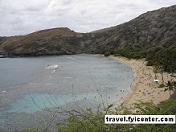
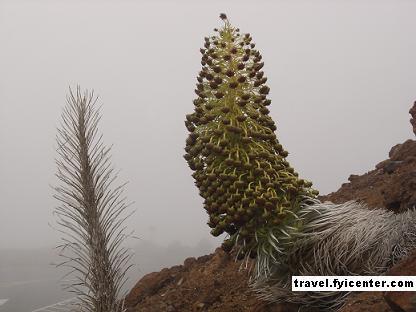
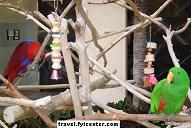
BIOLOGY The Hawaiian Islands have a wide variety of plant, marine and animal life. Vegetation zones include: coastal, dryland forest, mixed open forest, rain forest, subalpine and alpine. More than 90 percent of the native plants and animals living in Hawaii are found nowhere else in the world, and a greater variety of fish exist in Hawaiian waters than elsewhere. The humuhumunukunukuapuaa is the unofficial state fish. Hawaii is sometimes called the Endangered Species Capital of the World. At least one third of all the endangered species in the United States are found in Hawaii including the Nene Goose (official state bird), the Humpback Whale (official state marine mammal), the Pacific Green Sea Turtle and the Pueo (Hawaiian owl). The exotic species, man, poses a greater threat than nature to Hawaii's native flora and fauna.
Hawaii consists of eight major islands plus 124 minor islands, reefs and shoals, strung like a necklace across the Pacific for over 1,500 miles. The eight major islands (which make up over 99% of the total land area) are Oahu, Maui, Hawaii (known as Big Island), Kauai, Molokai, Lanai, Kahoolawe (uninhabited) and Niihau (privately owned). Each of the major islands has an identity all its own. Oahu is as different from Molokai and Maui as Kauai is from Lanai and the Big Island - each as varied and colorful as the official state flower, the hibiscus. With their collective mass of 4.1 million acres or 6,450 square miles, these islands form the fourth smallest state in the United States. Beyond mere geography, to Hawaiians the land is "mother". The Hawaiian word for land, 'aina, literally means "that which feeds". It doesn't belong to us; we belong to it, and are part of it.
With a resident population (1999) of 1.2 million, Hawaii has an average population density statewide of approximately 200 people per square mile. Island living is a test of tolerance. Hawaii is probably the only place in the United States, if not the world, where every single racial group is a minority - one of the world's most harmonious gatherings of people. At least a third of the population is of mixed ancestry. According to the Office of Hawaiian Affairs, the last study conducted in 1984 estimated that there were only 8,244 pure Hawaiians - about 0.7 percent of Hawaii's total population - a vanishing race. Today, in 2001, some think the number could be as low as 5,000.
Mixed (except Hawaiian) - 232,281 (20%)
Transport Honolulu International Airport (HNL), on the island of Oahu, is a major Pacific hub and an intermediate stop on many flights between the US mainland and Asia, Australia, New Zealand and the South Pacific. There's a 6.00 departure tax on all international flights. If you insist on arriving by sea, the QE II stops in Hawaii in January on its annual world cruise.
|
| |||||||||||||||||||||||||||||||||||||||
|
|
|
|||||||||||||||||||||||||||||||||||||||
|
Disclaimer: The FYIcenter travel team maintains this website to provide you general travel information. Our goal is to keep this information timely and accurate. If errors are brought to our attention, we will try to correct them. However FYIcenter.com accepts no responsibility or liability whatsoever with regard to the information on this site. | |||||||||||||||||||||||||||||||||||||||||

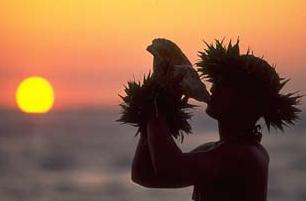












 The island group of Hawaii lies 3860km (2400 miles) off mainland America, comprised of 132 islands and atolls. The state of Hawaii consists of eight islands, of which seven are inhabited and six allow visitors. Oahu contains the capital, Honolulu, and is the most commercialised, while Hawaii is the biggest island.
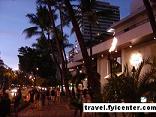 GEOGRAPHY Hawaii is the most remote island chain in the world, over 2,000 miles from the nearest landfall. Distance makes for splendid isolation - these Polynesian islands are removed from all else but one another.
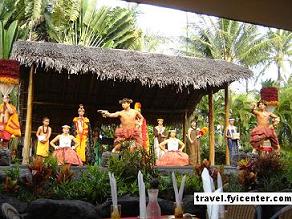 POPULATION The Hawaiian Islands have attracted human migrants in waves, first the Polynesians, then the whalers, the sandalwood merchants, the missionaries, the sugar planters and ranchers, the multi-ethnic traders and laborers, and finally the tourists.
 Hawaii's population of about 1.2 million breaks down roughly as follows: (1999)
 Money and Currency Hawaii is a moderately expensive destination with prices noticeably higher than those on mainland USA where most things are imported from. Land is also at a premium and pushes hotel prices up. Tipping is expected as in USA but in theory it is against the principles of Polynesian culture. Credit cards and travellers cheques are readily accepted from shops, hotels and restaurants and there are ATM machines at throughout the islands. Currency is the US$
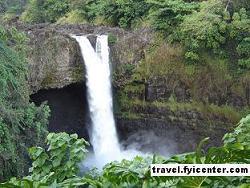 Hawaii Climate In the winter months from November to March - this is when mainland Americans, in particular retires, take their extended winter break. In these months, accommodation can be booked-out well in advance. Winter is also the peak season for surfing and whale watching making the north shore of Oahu and Maui popular destinations. The summer months are drier and slightly warmer (about 30OC), the seas and surf are generally calmer and this is the Hawaii holiday season popular with families. The low seasons when hotel prices are most likely to be discounted is between April-May and September-October.
 Hawaii Festivals